This project moves fast. New findings land here first — dated, sourced, and labeled with their verification status — before they're worked into the deeper pages. Newest first.
How to read the labels.Documented = stated in a primary or institutional source; Under investigation = being verified; Unverified = cited with corroboration still pending. Nothing here is final — findings are corrected in place when the evidence changes, and corrections are noted, not silently made.
October 9, 2026
Frances B. Jones identified: the widow behind the Bedford dower suits Documented
The plaintiff styled “Francis B. Jones” in the Bedford chancery suits of 1810 and 1821 was Frances B. Jones, widow of John Jones — who died intestate in or about 1796, “possessed at the time of death of an estate both real and personal to a large amount,” including lands, enslaved people, and a mansion house where Frances continued to live. Her 1821 bill of complaint (Bedford chancery 019-1821-020) names the children and distributees: Lewellen Jones; Elizabeth (m. Jesse Anderson); Nancy T. (m. Nelson Dawson); and Charles D. Jones (d. 1806–1810, intestate, without issue). Frances signed by her mark — she was illiterate — and her dower in the lands and in the enslaved people was never assigned. A separate case (019-1795-005) supplies the clincher: its reference to “son in law Jesse Anderson” is direct evidence this John Jones is Capt. John Jones. Full record: DB1 rows 3636–3641; DB4 rows 1452–1463.
October 9, 2026
Shandy Jones: the plantation birth is back on the table Documented
A re-read of the 1993 Pinkard & Clark genealogy — the source behind this project’s earlier “identity firewall” — shows the verdict was overstated. What the genealogy actually establishes about legislator Shandy Wesley Jones: born about December 20, 1816, in Huntsville, Alabama (per his Mobile Customs employment records and his death certificate), born a slave, and emancipated at about age four in the December 1820 act by John N. S. Jones and Alexander P. Jones. That is fully consistent with a Madison County Jones-plantation birth — and the July 2026 Alabama Review scholarship itself states he “was born in Madison County.” The identity firewall (legislator vs. the 1866/1873 Madison Shandy with wife Judy Ann) now reads likely different men, not proven: it rested on Mobile city-directory listings, but the genealogy admits Shandy is missing from the 1880 census entirely. The correction is logged beside the original in DB4 (rows 109, 189, 381, 633, 682, 727); nothing was deleted.
October 9, 2026
A Black church lot inside a 500-acre Jones estate fight Documented
Ada S. Jones v. Matkin et al. (1895–99), surfaced in the Madison County chancery transcript sweep, is a fight over a 500-acre estate — and its pleadings except, verbatim, a half-acre lot in the southwest corner of the southwest quarter of Section 33, “heretofore conveyed to certain negroes for a church.” The conveyance predates 1890: a Black church landholding carved out of — or adjacent to — Jones estate land, acknowledged in the estate’s own paperwork. The grantees are not yet named; that is the next pull. Companion finds from the same sweep: Elvira Jones v. John Bone, a Black family land-inheritance fight over 40 acres in which an 1886 will cut six Jones grandchildren off with $1 each; and Lucy T. Jones’s suit against her seven children over Huntsville property. Full record: transcript-sweep-final-batch02.md; DB1 +47 rows this session.
October 9, 2026
Priscilla Jones, free 20 years, sails for Liberia — Madison County’s documented 1852 emigration Documented
A verified read of Morris Raymond Boucher’s 1950 dissertation (The Free Negro in Alabama Prior to 1860, State University of Iowa) documents a Madison County emancipation-to-Liberia migration: Priscilla Jones, emancipated by John McConnell of Madison County, had been free for over twenty years when she sailed for Liberia in December 1852 from Savannah, Georgia, with six freeborn children and grandchildren. She was one of seven people McConnell had freed, sailing in a group of fifteen — eight emancipated slaves and seven free persons of color. Sixteen Alabama emigrants sailed that year in all (Alabama ninth among the states); Squire Grant, a free man of Glenville, had sailed separately in June. The dissertation cites American Colonization Society reports and the African Repository.
No record connects Priscilla Jones to the Lewellen Jones family of Madison County, and none is claimed here: a shared surname is not kinship. She is also not merged with Priscilla Drake of the Drake-attribution question, nor with the “Priscilla Jones” enumerated among free people of color in Boucher’s Marshall County appendix census table — three separate identities until direct evidence says otherwise. Full record: DB1 rows 3625–3627; bibliography (Boucher 1950, verified read).
October 8, 2026
Presenting at MSSA 2026 Documented
The Counter-Archive research has been accepted for presentation at the Mid-South Sociological Association annual conference, October 14–17 in Huntsville, Alabama. The paper — “Institutional Erasure, Mnemonic Hegemony, and the Avalon Plantation: A Genealogical Counter-Archive of the University of Alabama in Huntsville” — will be presented on Thursday, October 15, 11:00 am–12:15 pm, in Session 17 (Big Spring D). An undergraduate presenting a genealogical counter-archive to a room of sociologists: the method is the argument.
October 8, 2026
“Avalon”: what the name is, and what it isn’t Documented
A systematic search finds no nineteenth-century attestation of the name “Avalon” for the Jones plantation site now occupied by UAH. The earliest known uses are a 1968–71 Harrison family history and an October 20, 1978 letter from Clara Louise Harrison Cape to the UAH president. “Avalon” is the modern institutional name — the marker, the archives, and campus lore all use it, and this project uses it so readers know which site is meant. It is not a documented plantation-period name. Treating it as one would project a twentieth-century romantic label backwards onto a nineteenth-century landscape of enslaved labor. See the glossary entry on the name “Avalon.”
October 7, 2026
The archive has no face for Shandy Jones Documented
A systematic search of ADAH’s Alabama Photographs and Pictures Collection, the ADAH site-wide catalog, and Alabama Mosaic for photographs of Black Jones family members — Shandy Jones, Anthony Jones, Reuben/Reubin Jones, Mary Jones — returned confirmed negatives across every name. No photograph of any Black Jones family member from 19th-century Madison County is held in the state’s digital collections. The closest items are all non-matches: a 1970s Wilcox County “Anthony Jones” (wrong man, wrong century); Gandrud genealogy documents concerning white Joneses; unidentified 1872 Reconstruction Senate group photos (Shandy served in the House, 1868–70, and no individual is named). ADAH’s Reconstruction Legislature Photographs Collection holds individual portraits of five senators — none of Shandy Jones. Set beside this week’s other find — three studio portraits of the white Mary Elizabeth Perkins Terrell, whose kinship to the project’s Perkins line is unproven — the asymmetry is the argument: the archive preserves faces for the white network and none for the Black legislator. That silence is cataloged here as a finding, not an absence.
October 7, 2026
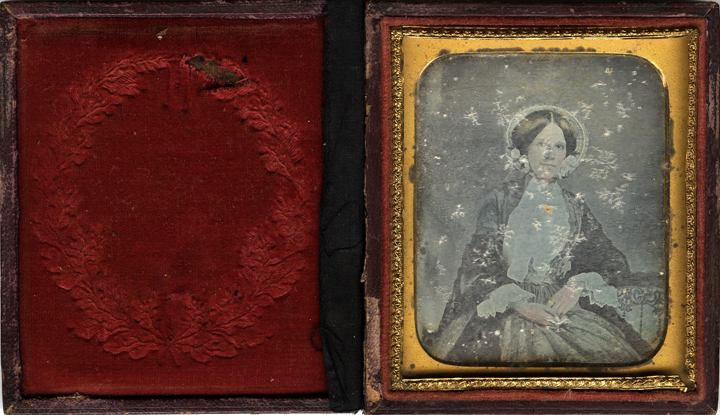
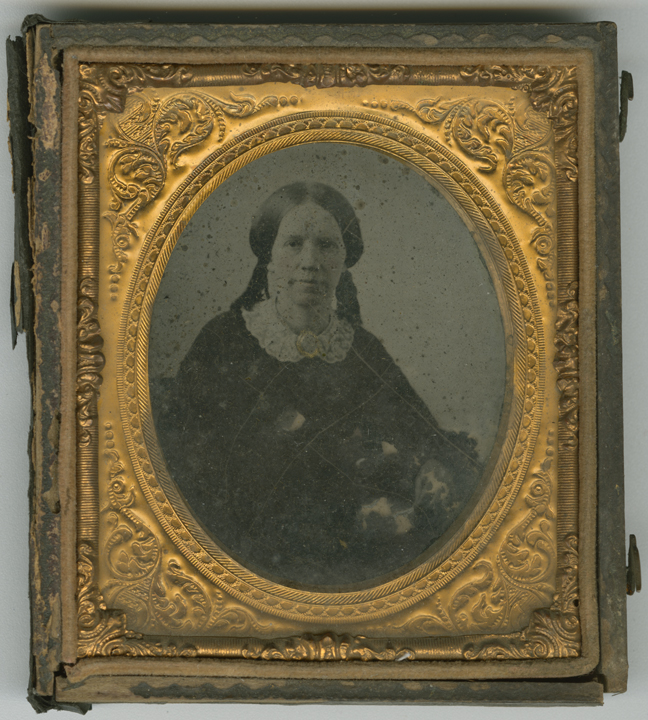
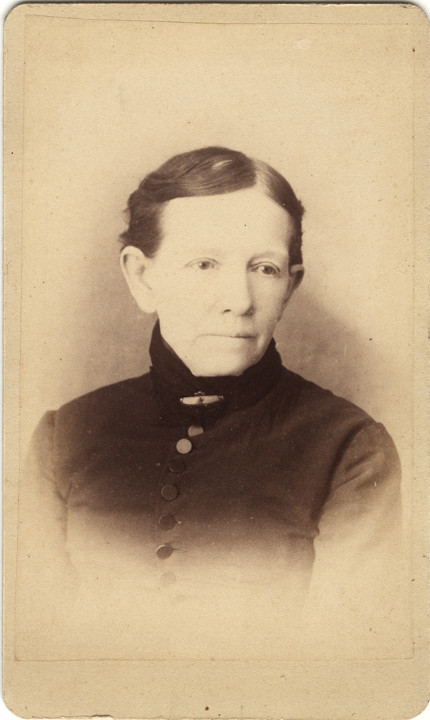
Three portraits of Mary Elizabeth Perkins Terrell — Perkins connection unproven Under investigation
A systematic search of ADAH’s Alabama Photographs and Pictures Collection for Jones-family photographs returned confirmed negatives for Shandy Jones, Alexander P. Jones, Dr. Benjamin Rush Jones, Lewellen/Llewellyn Jones, Frances Ann Maria Jones, and the Marengo County Richard Jones — no photographs of the project’s Jones line are held at ADAH. The search did surface three portraits of Mary Elizabeth Perkins Terrell (1822–1912): a daguerreotype (1850s), an ambrotype (1850s–60s), and a studio portrait (1870s).
ADAH describes her as wife of Peter Oliver Terrell, of LaGrange, Georgia and Uniontown, Alabama — and as “sister of Dr. A. R. Coleman.” That sibling note complicates the surname: if Perkins were her maiden name, a brother named Coleman implies either a half-sibling relationship or that Perkins was a first married name (born Coleman, married a Perkins, then married Terrell). An 1869 Selma marriage notice places a Miss M. J. Perkins marrying at Dr. A. R. Coleman’s residence, confirming a Coleman–Perkins connection in the Dallas/Marengo County Black Belt — but no document yet connects Mary Elizabeth to the project’s Perkins line (Benjamin Perkins and Frances Maria Jones of Madison County). The geography cuts against it: Uniontown/Selma/Demopolis are Black Belt; the project’s Perkinses are Tennessee Valley. She is not folded into the family tree. The photographs are published here as a research lead with the firewall stated, not as a finding of kinship.
October 7, 2026
Llewellyn Jones’s death, resolved from the primary source Documented
The January 1820 letter behind every account of Llewellyn Jones’s suicide has been found — in the John Williams Walker Papers at ADAH, among the handwritten originals (voices item 8407), which is why no full-text search ever caught it. A postscript on Taylor’s letter to Walker, dated January 26, 1820 (not the 27th as secondary accounts give): “Llewellyn Jones put a period to his existence last night,” with the marginal clarification “by hanging himself!” — placing the death on the night of January 25, 1820. A second, independent account survives in T. C. Perry’s February 1/3, 1820 letter (item 8408): “Llewallyn Jones Senr left this life a few days ago by means of a silk handkerchief — by which he suspended himself to one of the joists in Sally Jones’s unfinished country house,” adding that he “had bought the place a few weeks before & is thought to have hung himself in despair at the bad bargain he had made.” Neither letter states the relationship between Llewellyn and the “Judge Jones” named in the same correspondence, nor the identity of “Sally Jones” — those identities are not merged. Full record: paper note [369]; DB1 rows 3292–3293; DB4-543 resolved.
October 7, 2026
The Walker Papers, read in full Documented
Twenty-six volumes of the John Williams Walker family papers (ADAH voices 8402–8437 plus transcript items 8500–8503) have been read page by page. Beyond the suicide letters: Charles Tait uses the phrase “Georgia Faction” verbatim in October 1819, hoping “that the murmurs of ‘Georgia Faction’ may cease” — contemporary proof the slur was already current among the faction’s own leaders. Isaac L. Baker and Robert Ogden’s September 21, 1822 letter documents a rescission suit against Joshua Cox, identified as a Huntsville slave-trader, and names four enslaved people — Allen, Bill, Peter, Clara — with Bill and Peter’s recapture costing ~$150 and Allen still out, “aiming to get back into Tennessee” (DB2). The typed transcripts were not Jones-free after all: an 1823 estate paper embeds an 1814 Creek War certificate signed by Capt. Ben. P. Jones, 24th U.S. Infantry. Also logged: post-Panic-of-1819 economics from Tait (November 1819), the Planters & Mechanics Bank director turnover of March 1820, and Dr. R. Lee Fearn’s 1832 medical bill naming enslaved people old Jack, Jim, Judy, Peter, Rachel, Bill, and Phoebe. No Perkins, Donnell, or Haywood hits in any volume. Full record: DB1 rows 3292–3300, 3404; paper note [369]; bibliography.
October 6, 2026
St. Stephens Land Office registers: Jones purchasers in the federal land records Documented
Pages from the U.S. St. Stephens Land Office registers (ADAH Alabama Textual Materials Collection) are being read entry by entry. The purchases register so far yields a cluster of Jones buyers: Dr. John Jones, Dr. Nathaniel Jones, Dr. Benjamin Jones, Dr. Josiah Jones, and Dr. Wiley M. Jones, plus William H. Jones of Clark County applying for the SW¼ of Section 7, Township 7, Range 4 East. The transfer register (pages 38–47) is being extracted in full; every transfer entry is logged with date, parties, township/range/section, and consideration, with Jones-network entries folded into DB1 as land records. Full record: DB1 rows 3443–3476.
October 6, 2026
ADAH voices finds beyond Walker: bills of sale, an emancipation instrument, legislative acts Documented
Other ADAH digital items pulled this week: two bills of sale to John B. Blackmon — Peter Gill’s sale of enslaved brothers Frank and Dennis, and Matthew Jones’s sale of an enslaved boy, Dave, for $400 (voices 16594; DB2). A possible emancipation instrument for “Shandy, age 3” — directly relevant to the Shandy Jones scholarship — and an Alabama General Assembly act authorizing John A. S. Jones & Alexander P. Jones (voices 9761), plus an enrolled act “providing for the payment of Joby J…” (voices 9640). All are logged as leads pending full reads; nothing is merged on thin evidence. Full record: DB1 rows 3441–3449.
October 6, 2026
Batches 35–43: the DB4 sweep continues DocumentedUnder investigation
Roughly 132 more DB4 rows worked. Resolved: Elisha Perkins’s $553 bond of July 21, 1817 names three enslaved people — Scamon/Seamon and Dafney named, the third unnamed (DB2); “Francess A. M. Perkins” is Mary Frances Ann Maria Jones, wife of Benjamin Perkins (November 24, 1817 Bedford bond); Charles D. Jones was Lewellen Jones’s brother; Madison Probate Case No. 223 is Capt. Lewellen Jones’s estate; Eliza Ann Haywood Jones’s death date settles at September 17, 1852 from her stone; and the 1880 James W. S. Donnell is the son (b. May 12, 1859), distinct from the elder James Webb Smith Donnell (1820–1876). An 1870 Limestone census sweep recorded eleven Black/mulatto Jones-headed households (DB2) — with a do-not-merge firewall: the age-30 Shandy Jones of 1870 cannot be the Shandy Wesley Jones of the 1820 act. Open or partial items, including the Seaborn Jones claim contradiction and the Rachel Jones award discrepancy, stay open with the evidence stated both ways.
October 4, 2026
The Bedford chancery series, fully read Documented
All thirty-five Bedford County chancery cases in the 019 series now have complete manuscript memos — twelve new ones this week, read page by page from the original scans. Newly named: Spencer, bought by Elisha Perkins from Abraham Perkins in Lynchburg in December 1818 for $775, and Minny, “a Negro Girl Minny Bot of Elisha.” A new node: Harris Carter of Sussex County, whose will devised nine enslaved people divided among the Jones family in 1830. And Bedford magistrate William R. Jones is documented in a double role — trustee under an 1815 Moore–McClure trust deed and the magistrate who took its acknowledgment. Full record: paper notes [719]–[762]; DB1 rows 2434–2496; DB2 leads 2098–2099; DB4 rows 1076–1131.
October 4, 2026
The slaver’s will, found — and the two Bristol Joneses, doing business together Documented
The morning browser session located the probate record that could crack the conversion question: the Prerogative Court of Canterbury will of “James Jones, Merchant of Bristol, Gloucestershire” (PROB 11/1259/104), proved April 10, 1795 — three weeks after his death. Its contents are a £3.50 paid download away; any bequest to American kin would document the money’s path directly. The same session located the other Bristol trader’s will — Thomas Jones, proved December 1795 — and the firewall holds: two wills, nine months apart, two distinct men. But it also found the first documented business link between them: a December 1791 Bristol deed in which “Thomas Jones of Bristol, gentleman, and James Jones of St Philip and Jacob, merchant” transact together over five Strait Street properties. Associates, not the same man. Full record: paper note [716]; DB1 rows 2425–2428; DB4 row 1073.
October 4, 2026
The Thomas’s voyages, confirmed ship by ship Documented
All seven voyage IDs for the ship Thomas (ex-Sally) verified against the live SlaveVoyages database: 1785 to 1793, New Calabar and Bonny to St. Vincent, Tobago, Barbados, and Jamaica — 415 embarked on the first voyage, 368 on the last. The 1791 voyage lists two investors: James Jones and “Jones, T.” The Royal Charlotte’s 1787–88 voyage is confirmed too: 455 embarked at Bonny, 417 disembarked at Grenada. Full record: paper note [717]; DB1 rows 2430–2431.
October 4, 2026
The priest hunt closes Under investigation
The last free corpus has been searched: Documenting the American South’s full text, across dozens of query combinations for preacher, parson, minister, priest, and clergyman against slave market, auction, whipping, and cruel. No diary entry or letter describing a cruel clergyman at a slave market or auction exists there. The near-misses were checked and ruled out. With the Library of Congress volumes, HathiTrust, the Internet Archive, and now DocSouth all exhausted, the remembered account remains unlocated — and the hunt moves to paid or in-person collections, if it moves at all. Full record: paper note [718]; DB1 row 2433.
October 4, 2026
The Virginia end of the migration, in three new sources Documented
The Louisa County marriage bond register — now in a citable public abstract — independently confirms the October 22, 1792 bond of Llewellin Jones and Mary Anderson, with Nelson Anderson’s consent and Alexander Anderson and Martin Baker as bondsmen. A Virginia deed abstract places that same Nelson Anderson conveying 450 acres on the Chickahominy to his son Alexander eighteen months before the wedding. And a Huntsville–Madison County history confirms John Nelson Spotswood Jones came to Madison County with his father Lewellen — the migration as a family move. Full record: paper notes [714]–[715]; DB1 rows 2414–2424; DB4 rows 1071–1072.
October 4, 2026
The Perkins estate’s Black creditors Under investigation
The state archives’ transcription of the Alexander S. Perkins insolvent-estate case names two Black Jones creditors — “Sigh Jones,” whose $882.18 account was contested by the widow, and “Cy Jones.” The surname is as transcribed and may misread the manuscript. The same file documents Alexander P. Jones and Alexander S. Perkins dealing jointly in land and cotton in 1861–62. Full record: paper note [715]; DB1 rows 2418–2422; DB2 leads 2096–2097.
October 4, 2026
The trustee sale’s second property, identified Documented
The November 1867 trustee-sale notice advertised two Donnell properties, not one — and the second now has a name. The “magnificent residence in the town of Athens,” offered November 4, 1867 by B. Sanders, trustee for J.W.S. Donnell, is the Donnell House at 601 South Clinton Street: built 1849–1851 by the Rev. Robert Donnell, passed to his son James Webb Smith Donnell in 1855, occupied through the Civil War, and lost to bankruptcy in 1869, when Joshua P. Coman bought it for Athens Male College. The 1867–1869 deed chain is still open. Full record: paper note [712]; DB1 rows 2410, 2412; DB4 row 1070.
October 4, 2026
The Franklin County birth, explained Strong lead
Judge John Haywood — the “Father of Tennessee History” — lived in Franklin County, North Carolina, around 1800–1805: a biographical encyclopedia places him there when he left the bench, and the 1805 Raleigh Register lists him among the trustees of Franklin Academy. That is exactly where his daughter’s tombstone says she was born: Eliza Ann Haywood, March 3, 1807, Franklin County, “daughter of Judge John Haywood of N. C. & Tn.” A county history also confirms a third of the judge’s ten children — Thomas Jefferson Haywood, born 1797 in Orange County, whose son John Haywood, M.D. was born in Madison County, Alabama, in 1820. The parentage remains a strong lead, not a proven fact: the 1826 John Haywood will (Franklin County, NC, Will Book H, p. 154) — the prime candidate for her father’s — has now been read; it names only a son, John, and leaves the daughters unnamed, so Eliza Ann is neither confirmed nor excluded. Full record: paper notes [710]–[711], [1118], [1122]; DB1 rows 2399–2408, 3744, 3748; DB4 rows 1066–1068.
October 4, 2026
The trustee sale, in the newspaper’s own words — and a new Donnell house Documented
The November 1867 trustee sale of Seclusion Place now has its newspaper citation: the Athens Weekly Post notice, as transcribed by Faye Acton Axford and Eulalia Yancey Wellden, has B. Sanders, trustee for J.W.S. Donnell, advertising “the plantation known as the Seclusion Place, containing 2000 acres more or less” for cash sale in Lawrence County on Tuesday, November 12, 1867. The same notice advertises a second sale eight days earlier — on November 4 — of “the magnificent residence in the town of Athens,” near the public square. That Athens house is a new Donnell property lead; who bought either property is an open deed question. Full record: paper notes [708]–[709]; DB1 rows 2392–2394; DB4 rows 1064–1065.
October 4, 2026
The fleet, verified — and how the money moved Documented
Kenneth Morgan’s 2025 Bristol Record Society volume of slave-trade documents lets us check James Jones’s voyages ship by ship: he managed 68 slaving voyages from Bristol between 1783 and 1795 (revising the earlier 62-voyage figure). A 1786 table lists nine of his ships on the African coast at once — 1,697 tons, 3,520 captives intended. And a 1793 letter from Jones himself shows the money mechanism: slave cargoes at Kingston were converted into “account sales & bills” drawn on London. The table’s footnote gives his death as March 21, 1795. What we still cannot show: any of that wealth reaching Madison County. That link remains unproven. Full record: paper notes [706]–[707]; DB1 rows 2387–2391; DB4 rows 1062–1063.
October 4, 2026
“Bristol’s principal slave trading merchant”: James Jones’s Jamaican buyers, documented Documented
A peer-reviewed study of the Kingston “guinea factor” John Tailyour — the Scotsman who sold 17,374 enslaved Africans from fifty-five vessels between 1785 and 1792 without ever investing in a slave ship himself — documents James Jones of Bristol’s direct business relationship with the richest planter network in the British Atlantic. In September 1787, the great Jamaican sugar planter Simon Taylor wrote to Jones, “by then Bristol’s principal slave trading merchant,” to vouch for his cousin Tailyour’s new factoring company; three months later Jones sent his ship King George to Tailyour at Kingston. On December 19, 1789, Jones’s ship Hester arrived with 299 African captives consigned to Tailyour’s factoring house, and when the sale opened about three weeks later, Taylor bought eight “prime” men and one woman for his Golden Grove plantation — naming three of the newly arrived captives Taylor, Simon, and John. Tailyour’s letterbooks preserve his correspondence with Jones at Kingston across 1788 to 1792. Full record: paper note [705]; DB1 row 2382; DB4 rows 1058–1059.
The standing firewall holds: none of this connects James Jones’s wealth to the Madison County Joneses — that link remains unproven. The Tailyour Family Papers at the University of Michigan’s Clements Library are the strongest new route to the conversion question: the letterbooks should show how the profits moved, in bills of exchange and sugar consignments, even if they cannot show the money reaching Alabama.
October 4, 2026
J.N.S. Jones’s death date, resolved: November 17, 1853 Documented
The 1865–68 Limestone County probate entries filed under “J N S Jones” belonged to his son, J. Haywood / “John H.” Jones (d. August 13, 1866, aged 40) — not the elder Jones. The companion Alabama Supreme Court opinions Tanner, Adm’r v. Hayes, 47 Ala. 722, and Hayes et al. v. Collier, 47 Ala. 726 (1872), name the insolvent estate “J. Haywood Jones” outright (insolvency reported February 25, 1868; decree March 23/25, 1868). John Nelson Spotswood Jones’s own tombstone, photo-backed: born September 1, 1793, died November 17, 1853. The two generations are not merged. Full record: paper note [696]; DB1 rows 2361–2362; DB4 row 1040. The family tree no longer shows the conflict as unresolved.
September 28, 2026
June 24, 1867: Columbus, Turner, and Reuben register on the same day Documented
The 1867 voter registers at the Alabama Department of Archives and History corroborate the Freedman’s Bank family group: Columbus Jones, Turner Jones, and “Jones Ruben” all registered on June 24, 1867, in Madison County Precinct 1 / District 38 (Oath Book 1, pp. 109, 76, and 94; ADAH Madison County vol. 1, p. 23). Registration required men to be 21 or older, and the color column reads “Colored.” A precision note: the register form lists no age or occupation — the number after each name is the loyalty-oath book and page — so the identity with the bank depositor’s brothers is suggestive, not formally proven. And a reliable negative: no “Turner Moore” appears anywhere in the 1867 registers, consistent with Columbus’s father having died in March 1867. Across the full 1867 registration the project has verified 104 Madison County “Jones” records — 81 African-American and 23 White — the single richest naming source located so far. (Corrected September 2026: an earlier “105” figure conflated Madison and Limestone Counties and all races.) Full record: research memo, 2026-09-27; page images on Drive.
September 27, 2026
The Turner Moore lead: the enslaver is still unnamed Under investigation
The white Moore who enslaved Columbus Jones's father remains unidentified, and no record yet names him — a lead, not a merge. The strongest candidate is Benjamin T. Moore (b. North Carolina 1813, lawyer, nephew of Gov. Gabriel Moore), who took over Gabriel's Madison County estate in the 1830s: the 1860 slave schedule for his household (read from the manuscript, not the printed count) shows about 95 enslaved people, including a man in Turner's age cohort. Slave schedules do not name individuals, so the link cannot be proven from this record — and his "39 slaves" pardon-list figure is disproven by the manuscript, do not cite it.
The burial ground was fixed, not the enslaver: the old Moore Plantation slave cemetery on Harvest Road (Sec. 19, T2S, R2W; GPS N 34.858, W -86.7787) holds the Black Moore and Hammons families into the 20th century — but its antebellum owner is unproven, and it is not the same ground as Gabriel Moore's house site (Sec. 6, T3, R1W, about seven miles away). The forced-separation mechanism that put Turner's family apart from Eliza Jones is unproven; the evidence slightly favors neighboring plantations over a sale. Full record: research memo, 2026-09-27; voter-registration and census follow-ups on Drive.
September 24, 2026
The Avalon line, corrected: John Jones was Lane's son-in-law, not his son DocumentedUnder investigation
A 1966 compiled family chart draws "John Jones" as the son of Lane Jones — an error of compression. Wilson Miles Cary's 1897 genealogy, read in full, corrects it: John Jones married Lane's daughter Frances Barber Jones (b. January 26, 1740) in 1759 — he was the son-in-law, not the son. Four records converge on Frances: the 1761 York County special verdict naming her among Lane's children, the 1763 Cumberland deed naming "John Jones and Frances Barber Jones, his wife" among Lane's heirs, the 1792 Bedford deed, and the Bedford chancery files naming her as John's widow. The corrected line: Rev. Rowland Jones (1644–1688) → Orlando Jones (1681–1719) → Lane Jones (1707–~1750) → Frances Barber Jones → Capt. John Jones (d. ~1796) → Llewellyn (~1760–1820).
The money trail runs generation by generation: tobacco plantations and enslaved labor (Rev. Rowland — "by no means dependent upon his ministerial salary"); tobacco export, political office, and about 21 enslaved people (Orlando, a House of Burgesses member); the inherited Tidewater estate plus the Barber/Archer marriage (Lane); Piedmont land and enslaved labor — "an estate both real and personal to a large amount," with £180 plus ten enslaved people given away in a single 1789 marriage portion (John); enslaved people, four-state land speculation, and planter credit, with 47 enslaved people in the estate inventory (Llewellyn). No ship ownership or direct transatlantic trading was found for these five generations — the proven transatlantic wealth sits in the wider Jones network, and the bridge to this line stays open. What Llewellyn did before the war remains unresolved: he was about fifteen in 1775, and no birth, apprenticeship, tax, or pre-1775 land record has surfaced. Valley Forge rests on derivative sources only; the November 1778 "Jones, Lew, Captain" roster must not be assigned to him. Full record: paper notes [495]–[499]; DB1 rows 1759–1772.
September 24, 2026
The 1820 act, read verbatim: Elizabeth was forty, not three Documented
The December 11, 1820 Alabama act authorizing John N. S. Jones and Alexander P. Jones to free "a mulatto woman, named Elizabeth, aged forty years; a mulatto girl, named Evelina, aged thirteen years; a mulatto girl named Ann, aged six years; and a mulatto, child, named Shandy, three years" has been read in its original printed form. The single condition: a bond to the Madison County Court's chief justice, with court-approved security, that none of the four would ever become a public charge. Not a self-purchase; no witnesses, no stated kinship, no father named, no gender given for Shandy, no later surnames.
The correction: Elizabeth was not "manumitted at age three" — she was about forty; the three-year-old was Shandy. That also keeps the identities straight: Eliza Jones — Columbus's mother, who died in fall 1861 at her son's home (Freedman's Bank account 29) — is a different person; Elizabeth would have been about forty-seven at Columbus's birth. The prior enslaver is unresolved — the scholarship's lead is Lewellen Jones's estate, under settlement when his two sons petitioned the legislature, but the act itself is silent. The 2017 Senate resolution honoring Shandy gives December 1; the printed act reads December 11 — a ten-day difference, flagged not forced. Full record: paper notes [500]–[502]; DB1 rows 1773–1778.
September 24, 2026
Evalina B. Jones: a deed overturns a negative, and a twenty-five-year estate fight surfaces DocumentedUnder investigation
This project once recorded that no Evalina Jones deed existed. A January 15, 1832 deed overturns it: Arthur W. Jones and Evalina B. Jones conveyed 112.5 acres (part of the NE¼ of Section 17, previously bought from Hugh L. White) to Beverly Keeble for $1,325 — Evalina privately examined the day before, consistent with releasing her dower interest. (Madison County Deed Book F, p. 501; registered June 5, 1832.)
Arthur died about September 17, 1833. Evalina petitioned for dower in April 1834 and dissented from the will that May — then watched her petition dismissed on April 16, 1835 for "insufficient description" of the land, taxed with costs. Dower was allotted anyway on February 27, 1838: her personalty share included four enslaved people — Washington, Henry, Elm, and Susan — valued $150 over her share, which she and her second husband paid back to the executor. The fight ran another decade: chancery case No. 298 (Friley Jones, executor, v. Benjamin Coyle and wife Evalina B. Coyle, 1848–1853) over $1,144.53 in later-discovered debts and a $1,512 judgment tied to the hire of an enslaved person belonging to Arthur's infant son Charles M. Jones — no final decree found. Evalina married Benjamin Coyle in 1837; in 1847 the couple conveyed her 73¾-acre dower tract to Willis Blankenship for $800, for her natural life. She died March 15, 1857, leaving everything to her four younger Coyle children and expressly nothing to her three older Jones children. Final settlement, April 1860: $7,594.65 in four shares of $1,898.66¼. Full record: paper notes [503]–[509]; DB1 rows 1779–1788.
September 24, 2026
TVAR's social record is empty: no trace of the 2022 survey — and the roster checks out Documented
A September 2026 check of TVAR's (Tennessee Valley Archaeological Research) LinkedIn company page and public Facebook presence found zero posts about the May 2022 GPR survey and no mention of a mandible anywhere in the checked content — the firm's own channels carry no trace of the work, consistent with the May 2022 UAH article being the only public record. Personnel verified on LinkedIn: Hunter Johnson (President), Kate Manning (Principal Investigator and Field Coordinator), Travis Rael (Laboratory Director), and Ashley Stewart (Bioarchaeologist). The named surveyor, Claiborne Sea, is not listed in TVAR's company roster — his independent profile lists him as a University of Alabama PhD candidate, formerly a geophysical/GIS consultant and now with ArchaeoSpatial Analytics. The survey's only other public trace: a May 17, 2022 post in the Jackson County Historical Association Facebook group — "UAH is doing its best to locate grave sites in a grid analysis" — 54 likes, the day after UAH's announcement. Facebook's timeline is login-gated, so this is a public-portion negative, not an exhaustive search. Full sequence: What UAH Knew: Burial Timeline.
September 24, 2026
Media recovered: the WAFF 2022 story is real, and the ~60 figure traces to it Documented
Stefante Randall's February 21, 2022 WAFF 48 Black History Month story on unmarked slave graves at UAH has been located and read in full (it was previously listed as Unverified). Two things matter: it reported a separate 2017 GPR survey between Roberts Hall, the Nursing School, and the Jones Perkins Family Cemetery — aimed at detecting enslaved housing, with finds of animal bones, glass bricks, and a horseshoe from stable keeping — distinct from the May 2022 TVAR scan; and it is the earliest located source for the "about 60 graves" figure just south of campus on Ben Graves Drive, pinning that number's public circulation to media coverage, not a published UAH survey. It also records a history-department committee to erect monuments and a research fund, plus student Emily Therrell's verdict: "It's not that UAH tries to hide it, but they don't acknowledge it." Figure conflicts flagged as circulation, not resolution: the story repeats "20 slaves at purchase" (against the manuscript's 47) and "20 to 121 by the Civil War" (against the manuscript's 96).
Glenwood context joins the record as the local precedent for the GPR work: Kelly Kazek's July 28, 2015 AL.com piece and its July 29, 2015 Huntsville Times companion are cited (title, byline, and date only), and TVAR's June 2021 Glenwood GPR survey — 27 unmarked graves identified — confirms the firm UAH hired was the established local outfit for exactly this work. Full sequence: What UAH Knew: Burial Timeline.
September 24, 2026
Evidence sweep: the surveyor is real, the 2019 text is recovered, the cemetery has a second neighbor DocumentedUnder investigation
"Claiborne Sea" — the name on the 2022 GPR survey — is a real person: a University of Alabama archaeology doctoral student and GPR specialist. TVAR was the established local firm for exactly this work (Glenwood Cemetery, 2021: 27 unmarked graves identified), yet the May 2022 UAH announcement remains the only public record of the campus survey — absent even from TVAR's own project pages. The deleted 2019 monument announcement's full text was recovered from search-engine cache, including Adan's line that "Many members of the UAH community are unaware that one of the largest plantations in Madison County was right here on campus" — no genuine Wayback capture exists yet.
The campus cemetery's paper trail also grew: Find a Grave lists "Perkins Cemetery in Huntsville" (ID 25349; 34.73220, −86.64250, published claim); an independent 2012/2014 survey transcribed all four standing markers and documented a second campus cemetery, the "Jones (Mary) Cemetery" near the daycare playground; and the cemetery is not on the Alabama Historical Commission's Historic Cemetery Register, with no public state site number located. Full sequence: What UAH Knew: Burial Timeline.
September 24, 2026
The capital mechanism: slavery-and-capitalism scholarship joins the site Documented
Three registers of the same claim now frame the site's wealth argument on the Institutional Philanthropy page: Julia Ott's mechanism (enslaved people as "self-augmenting capital"; slave-backed bonds through Baring Brothers, Brown Brothers, and the Rothschilds; $2 billion in enslaved wealth — "a third of the wealth owned by all U.S. citizens"); Beckert and Rockman's Slavery's Capitalism (raw cotton as more than half of U.S. exports; slavery's "second flourishing"); and Matthew Desmond's 1619 Project essay ("In order to understand the brutality of American capitalism, you have to start on the plantation"; "Cotton slavery was too big to fail"). The site's own records show the mechanism at work locally: Dearing v. Lightfoot (1844) has Hercules and Solomon mortgaged at $2,000 each in 1840.
September 24, 2026
Post-emancipation context: tenant farming, Black schools, the sister campus, cooperatives DocumentedProposal
Dwayne Cox's history of Alabama agriculture (tenant farming replaced slavery as the state's primary labor source; the furnishing-merchant squeeze; roughly equal Black and white tenant farmers by 1920) now frames the tenant-lien discussion on the Debt & Labor page — including Reuben Jones's February 1872 crop lien. Alabama A&M's official history corroborates William Hooper Councill's 1869 Lincoln Normal School on the history timeline, alongside new Reconstruction-era HBCU context (Alabama State 1867, Talladega 1869, Tuskegee 1881, Oakwood 1896). The sister-campus sidebar gains Mozingo's specifics (Lawrence's 1831 sale to the trustees, 30,750 shingles in July 1846, Benagh's $7,000 trip). And the restorative-justice proposals add a sixth item — cooperative economics, drawn from Nonprofit Quarterly — flagged as present-day framing, not evidence.
September 24, 2026
Deed indexes: freedpeople buying land out of the Jones network's own estates DocumentedUnder investigation
The overnight Madison County Probate deed-index sweep (official portal, signed-in session) turned up the project's strongest land lead yet: the Alexander P. Jones estate, "by Reg[ister]," conveyed land in 1870 to Prince Bradford (Deed Book OO, p. 568) and Johnson Beasley (OO, p. 596) — the same two men who bought 1870 land through the Donnell estate's Register's deeds (OO 556/559). Two estates, one year, the same two buyers: a freedmen land-purchase channel. Race is not stated in the indexes, so "freedpeople buyer" is a candidate status until the deed images are read. The Bradford cluster deepens: "Evilena Lee Jones et al." conveyed to Prince Bradford in 1877 (BBB 389) — "Evilena" is very likely the indexer's spelling of Eveline, wife of Lee Jones and sister of Columbus Jones (Freedman's Bank account 29): a Jones-descendant grantor selling to the Bradford buyer, a strong lead, not a merge. And the sweep's only index-marked Black buyer: "Phil Eldridge (Col)" bought from Jas. I. and Minnie P. Jones in 1879 (DDD 78).
The catch: the lettered deed books (A–RR) are not viewable online — the portal's non-indexed books list only numbered volumes 442–770, and index VIEW links open index pages, not deeds. Deed-level reading (race, prices, parcels, any Avalon or enslaved-person mentions) needs the Probate Judge's office — 256-532-3330 — or an in-person visit. Priority pull list: OO 556/559/568/594/596, BBB 389, DDD 78, CCC 462, PP 562, QQ 30. Full record: paper notes [489]–[492]; DB1 rows 1738–1754.
September 24, 2026
Rathbun Freedman's Bank, Vol. 1 — folded in Documented
The full extraction of Fred C. Rathbun's Names from Huntsville, Alabama, 1865–1869 (NARA M816, Roll 1, accounts 1–385) is now in the research databases and paper notes. Columbus Jones's Account No. 29 (opened October 2, 1867) names his father Turner Moore — died March 1867 at Columbus's home — and his mother Eliza Jones — died fall 1861 at her son's home — alongside his spouse Tomietta Jones and his brothers Reuben and Turner, both living in 1867.
Also confirmed: Lucion and William Jones are brothers, through parents Rolley and Gilly/Gilley Jones. And a clean negative — no Perkins appears anywhere in accounts 1–385, which constrains where the Perkins line can be found in the bank records.
September 24, 2026
Limestone County: Reuben Jones's marriage isn't there — but his crop lien is Documented
The entire unindexed tail of the Limestone County 1869–1874 Colored marriage book (book pages 117–280) was scanned page by page: no Reuben Jones appears as a groom anywhere in the volume. The Master Index citation "JONES, REUBEN — p. 126" is wrong — book page 126 is William Collin and Winnie Blackwell, married January 15, 1871. The Limestone marriage-book route is closed; the search moves to Madison County or an unrecorded marriage.
New positive find in the same sweep: Reuben Jones granted a crop/rent lien to R. B. Patton Jr., Limestone County Deed Book 14, page 368, around February 1872 — placing Reuben farming in Limestone County in early 1872 in a tenant or furnishing relationship. (A separate sheriff's sale deed on the same pages, sheriff to William G. Lewis for $100, does not involve Reuben.)
September 24, 2026
Two 1958 letters warned UAH's predecessor about the graveyard in the construction footprint Documented
Kathleen Paul Jones, a genealogist, wrote to Dr. Philip M. Mason of the University Center (the institution that became UAH) on June 1, 1958, after her son showed her the model layout of the planned campus: "When our son, Harvie Jones, showed me the model lay-out of the University Center, I asked 'What are you going to do with Lewellen Jones?'" — asking what would become of the Lewellen Jones graveyard in the construction footprint. A June 8 follow-up thanks Mason — "it is good to know the old graveyard will be cared for" — and warns other Revolutionary soldiers' resting places are "about to be engulfed by progress." Source: Frances Cabaniss Roberts Collection, Ser. 4, Subser. B, Box 1, Folder 12, UAH Archives.
Evidence sweep: what UAH's own record shows it knew DocumentedUnder investigation
A sweep of UAH's own publications, board minutes, the student press, and local news established a dated institutional record: UAH Archives photographed the "Jones family cemetery" behind Morton Hall in 1988; UAH announced a two-sided cemetery monument in 2019 — the announcement page is now deleted (404) and no completion was ever announced; UAH hired Tennessee Valley Archaeological Research for a three-day GPR scan in May 2022 "in an attempt to locate where enslaved people were laid to rest" — and never published the results.
Honest negatives from the same sweep: no cemetery content in the checked Board of Trustees minutes (most 2018–2022 meetings remain unchecked — a coverage gap, not proof), and no press record of any UAH construction project encountering human remains. Full timeline: What UAH Knew: Burial Timeline.
Shandy Jones found: the 1820 emancipated 3-year-old registers to vote in 1867 Documented
"Jones, Shandy" appears in the 1867 Madison County voter registration, vol. 1, p. 57 — registered July 1867, race African-American, Precinct/Ward 2, District 38. This is very likely the 3-year-old Shandy emancipated in the December 11, 1820 legislative act alongside his mother Elizabeth and siblings Evalina and Ann — he would be about fifty in 1867. It is the first post-emancipation trace of the Elizabeth family; no post-1820 records of Elizabeth, Evalina, or Ann have been found in ADAH's digital collections. Shandy does not appear in the 1875 voter registration.
Source: Alabama Department of Archives and History, 1867 Voter Registration Books, ADAH voter1867 id 109967 ↗. The 1820 act's legislative trail is also reconstructed: House journal Nov 17, 1820 (bill read second time, ordered engrossed), Senate journal Dec 11 (enrolled-bills committee report), House journal pp. 89–90 (governor signed "on the 11th inst."). House journal ↗ · Senate journal ↗.
October 8, 2026
The Avalon site, photographed: Jones family cemetery on the UAH campus Documented
UAH Archives' Historic Photographs Collection holds three photographs of the Jones family cemetery — the burial ground on what's now the UAH campus behind Morton Hall, on the Avalon plantation site itself. No photographs of the Avalon plantation house are known to survive in any archive.